
Wind is easy to ignore until it starts pushing your car across the lane.
On open highways, in deserts and across wide plains, strong gusts are a normal part of the drive.
In some regions, wind can also lift enough dust to cut visibility to almost nothing in seconds.
Both situations are manageable if you know what to do before they happen.
This guide is based on National Weather Service advice and adapted for drivers on a long trip.
How strong wind gets
The National Weather Service explains that high winds can come from severe thunderstorms or strong weather systems.
They can also flow down from mountains.
When winds are sustained at 40 to 50 mph, isolated wind damage is possible.
During strong thunderstorms, straight-line winds can exceed 100 mph.
Wind like that can move objects around and puts drivers at real risk.
Before you leave: read the wind forecast
Many drivers check for rain or snow and skip the wind.
On a road trip, the wind forecast deserves the same attention.
- Look for wind advisories or high wind warnings along your route.
- Pay extra attention if you will cross open plains, deserts, long bridges or mountain passes.
- Think about your load if you carry a roof box, bikes or a small trailer.
- Consider changing the time or day of a long open stretch if strong wind is expected.
The same storms that bring wind can bring lightning and tornadoes.
Our guide on thunderstorms and tornadoes on a road trip covers those risks.
Driving in strong crosswinds
A strong side wind can nudge the car toward the shoulder or into the next lane.
Gusts are often worse than steady wind, because they hit without warning.
The NWS high wind safety page gives drivers two simple instructions.
- Hold the steering wheel with both hands.
- Slow down.
Lower speed gives you more time to correct when a gust pushes the car.
Both hands on the wheel let you make small, steady corrections instead of sudden ones.
Expect gusts in certain places.
- Coming out from behind a hill, a building or a line of trees.
- On bridges and overpasses.
- Through gaps in mountain ranges.
- When passing or being passed by a large truck.
Give high-profile vehicles extra room
Trucks, buses and vehicles towing trailers catch far more wind than a car.
The NWS advises keeping your distance from these high-profile vehicles in strong wind.
It warns that one strong gust can be enough to flip a trailer onto its side.
Avoid driving right next to a truck or a camper for long stretches.
Pass them only when you can do it quickly and with plenty of space.
If you are the one towing a trailer or driving a tall van, the risk applies to you too.
On a very windy day, waiting it out may be the safest choice.
When wind becomes dangerous: find shelter
During a high wind warning or a severe thunderstorm warning, the NWS advises getting inside a sturdy building.
Once inside, move to an interior room.
If no building is near, the NWS says to take shelter in your car.
If you can, drive to a nearby sturdy building.
Otherwise, move the car to a spot where it is less likely to be hit by falling trees or power lines.
Watch out for power lines
Strong wind brings down trees and power lines.
The NWS warns that power lines lying on the ground may be live.
Do not go near them, and do not drive over them.
If a line falls on your car, stay inside and call 911.
Dust storms: pull aside and wait
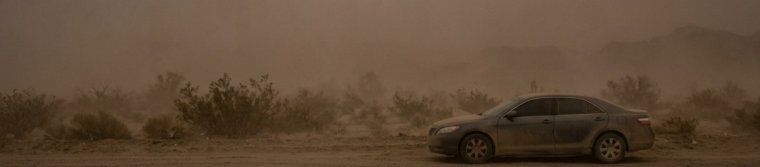
In dry regions, strong wind can raise a wall of dust.
Visibility can go from clear to near zero in moments.
That is when chain-reaction crashes happen, because drivers cannot see stopped cars ahead.
The NWS gives a specific set of steps for drivers caught in a dust storm.
If you can pull off the road
- Pull your vehicle off the pavement as far as possible.
- Stop the car.
- Turn off your lights.
- Set the emergency brake.
- Take your foot off the brake pedal, so your tail lights are not lit.
Turning off the lights may feel strange.
The reason is practical.
A driver behind you may see your lights and follow them, thinking you are still on the road.
With the lights off, your car is less likely to become a target in the dust.
If you cannot pull off
Sometimes there is no safe place to leave the road right away.
In that case, the NWS advises the following.
- Drive at a speed suitable for the visibility.
- Turn on your lights.
- Sound your horn now and then.
- Use the painted center line to help guide you.
- Look for a safe place to pull off the roadway.
The NWS is clear on one point.
Never stop on the traveled part of the road.
A car stopped in a lane is at serious risk of being hit from behind.
While you wait
Keep your seat belt on.
Close the windows and set the climate control to recirculate.
Stay in the car until the dust passes and visibility improves.
Dust storms often move through fairly quickly.
A short wait is far safer than pushing ahead blind.
Low visibility from other causes
Dust is not the only thing that can hide the road.
Fog can also drop visibility to a few car lengths.
Our guide on driving in fog explains how to see, be seen and know when to stop.
Wind, smoke and wildfires
In some regions, strong dry winds also raise the risk of wildfires.
The NWS advises being prepared for wildfire risk in areas affected by those winds.
If you see smoke or hear of fires near your route, check road closures before you continue.
Follow every instruction from local officials.
A windy-day checklist
- Wind advisories and warnings checked for the whole route.
- Roof cargo and bike racks secured, or removed if not needed.
- Gas tank kept above half so you can wait or detour.
- Both hands on the wheel and speed reduced in gusts.
- Extra room left for trucks, buses and trailers.
- Dust storm steps reviewed with everyone who drives.
Before a long drive, our pre-trip car check helps make sure tires, lights and wipers are ready.
The bottom line
In strong wind, hold the wheel with both hands, slow down and give large vehicles space.
In a dust storm, get off the pavement, turn off the lights, set the brake and take your foot off the pedal.
Never stop in a travel lane.
Waiting out the worst of the weather is always better than driving into it.
Sources and Further Reading
- National Weather Service: During a High Wind Event — supports the driving advice for strong wind, the warning about high-profile vehicles, sheltering in a building or the car, the danger of downed power lines and the step-by-step dust storm instructions.
- National Weather Service: Wind — supports the causes of high winds, the 40 to 50 mph damage threshold and the straight-line wind speeds in strong thunderstorms.