
Cars rarely fail without warning.
Long before a breakdown, most problems announce themselves with a drip, a smell, a sound or a change in how the car feels.
You do not need to be a mechanic to notice these signs.
You only need to pay attention and know what the common ones usually mean.
Catching a problem early often means a smaller repair and a safer car.
It also helps you describe the problem clearly when you talk to a technician.
This guide is based on the troubleshooting advice in the Federal Trade Commission's Auto Repair Basics guide.
Start with your senses
The FTC describes four simple ways to spot trouble.
- Look at the ground under and around the car.
- Listen for sounds that were not there before.
- Notice changes in how the car steers, rides or brakes.
- Pay attention to unusual odors inside or outside the car.
A good habit is a quick walk around the car before your first drive of the day.
It takes less than a minute, and it is often how leaks are found early.
Reading a puddle under the car
A small stain or an occasional drop may not mean much.
Wet spots, however, deserve attention, and fresh puddles should be checked right away.
To see the color clearly, slide a sheet of white cardboard under the engine overnight.
In the morning, look at the color and feel of any drops.
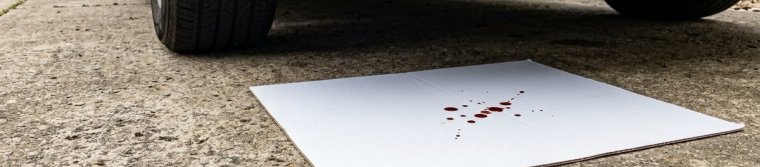
- Yellowish green, pastel blue or bright orange: usually antifreeze, also called coolant. It can point to an overheated engine or a bad hose, water pump or radiator.
- Dark brown or black and oily: usually engine oil. A worn seal or gasket is a common cause.
- Red and oily: often transmission fluid or power steering fluid.
- Clear water: usually no problem. It is often normal condensation from the air conditioner.
Note where the drops fall, front, middle or rear.
That location helps the technician find the source faster.
Smells that signal a problem
Some warnings are right under your nose.
The FTC links several common odors to specific problems.
- Burned toast, a light and sharp smell: often an electrical short and burning insulation. Try not to drive the car until it is checked.
- Rotten eggs or burning sulfur: usually a problem with the catalytic converter or other emission controls. Do not delay the repair.
- A thick, acrid smell: usually burning oil. Look for signs of a leak.
- Gasoline after a failed start: the engine may be flooded. Wait a few minutes before trying again.
- Gasoline that does not go away: possibly a leak in the fuel system. This can be dangerous and needs attention right away.
- Burning resin or a chemical smell: may mean overheated brakes or clutch. Check that the parking brake is off.
- A sweet, steamy smell: often a coolant leak.
When a smell means stop
Two situations call for immediate action.
If you smell coolant together with a hot metallic smell and see steam from under the hood, the engine has overheated.
Pull over as soon as it is safe.
The FTC warns that continued driving could cause severe engine damage, and the car should be towed.
Light smoke coming from one wheel can mean a stuck brake.
That car should also be towed for repair.
After repeated hard braking on mountain roads, stop and let the brakes cool.
What common noises usually mean
Squeaks, rattles and rumbles are clues.
Try to note when the sound happens.
Does it change with engine speed, with road speed, or only when you brake or turn?
- Squeal: a sharp, shrill sound that follows engine speed. Often a loose or worn belt for the fan, power steering or air conditioning.
- Click: a light, sharp noise. It can come from a loose wheel cover, a bent fan blade, a stuck valve lifter or low engine oil.
- Screech: a high, metallic sound while moving. Often the brake wear indicators telling you it is time for service.
- Rumble: a low, rhythmic sound. Often an exhaust pipe, converter or muffler problem, or a worn drive-line part.
- Ping: a metallic tapping that follows engine speed. Usually fuel with lower octane than recommended.
- Heavy knock: a rhythmic pounding. It can mean worn engine bearings or a loose torque converter.
- Clunk: a random thump. Often a loose shock absorber, suspension part, exhaust pipe or muffler.
A heavy knock from the engine is serious.
Have it checked before driving far.
Signs you can feel through the wheel and pedals
Hard handling, a rough ride, vibration and poor performance almost always point to a problem.
Steering
Wandering or trouble driving in a straight line can come from misaligned wheels or worn steering parts.
A car that pulls to one side may have something as simple as an underinflated tire.
It may also have a damaged or misaligned front end.
Ride and handling
Worn shock absorbers or wrong tire pressure can make cornering feel loose.
The FTC suggests a simple test.
Push down hard on each corner of the car and let go.
If it bounces twice or more, the shocks may be weak.
An unbalanced tire can make the car vibrate and wear out steering and suspension parts early.
Brakes
Schedule a brake check if you notice any of these signs.
- The car pulls to one side when you brake.
- The pedal sinks toward the floor when you hold it down.
- You hear or feel scraping or grinding while braking.
- The brake warning light is on.
Engine and transmission
Hard starts, rough idling, stalling, weak acceleration and falling gas mileage all point to engine trouble.
So does using more than one quart of oil between changes.
Transmission warning signs include hard shifts and slipping while you accelerate.
A delay when shifting into drive or reverse is another sign.
FuelEconomy.gov adds that a lit check engine light should be checked by a mechanic, even if the car feels normal.
You can read more in its guide to keeping your vehicle in shape.
Check the simple things first
Car trouble does not always mean a major repair.
The FTC gives a few examples of simple causes that can look like big ones.
- Loose or corroded battery terminals can make a battery look dead.
- A dead battery or a poor connection can look like a bad starter.
- Loose wiring can make an alternator look defective.
- A disconnected hose or a plugged filter can cause poor transmission performance.
Ask your technician to test these simple items before replacing expensive parts.
How to describe the problem to a mechanic
Good notes make diagnosis faster and cheaper.
- What you noticed: a sound, a smell, a leak or a feeling.
- When it happens: cold start, highway speed, braking, turning.
- How long it has been going on.
- Whether it is getting worse.
- Any warning lights on the dashboard.
A short video on your phone can capture a noise that disappears the moment you reach the shop.
Your car talks all the time.
Learning to listen is one of the cheapest forms of car care there is.
Sources and Further Reading
- Federal Trade Commission: Auto Repair Basics. Fluid colors, warning smells, common noises, steering, brake, engine and transmission symptoms, and simple troubleshooting.
- FuelEconomy.gov: Keeping Your Vehicle in Shape. Why a lit check engine light should be inspected even when the car seems fine.
- FuelEconomy.gov: Selecting the Right Octane Fuel. Why low octane fuel can cause pinging.