
For some travelers, the hardest part of a road trip is not traffic or long hours.
It is the queasy feeling that builds in the back seat after the first winding road.
Car sickness can turn a fun drive into a miserable one for kids and adults alike.
The good news is that a few simple habits often make a real difference.
This guide explains why motion sickness happens and what tends to help.
It is based on information from the National Library of Medicine and the National Institutes of Health.
It also covers what to pack and when to talk with a healthcare provider.
What causes car sickness
MedlinePlus explains that your brain senses movement through several channels at once.
It gets signals from your inner ears, your eyes, your muscles and your joints.
When those signals do not match, you can get motion sickness.
MedlinePlus gives a familiar example.
When you read on a phone in a moving vehicle, your eyes focus on something that is not moving.
Your inner ear, meanwhile, senses the motion of the ride.
That mismatch is a common trigger in the back seat of a car.
Who gets it most
Anyone can get motion sickness, according to MedlinePlus.
It is more common in children, pregnant women and people taking certain medicines.
It happens in cars, trains and airplanes, and especially on boats.
Some people feel it only on curvy roads, while others feel it on almost any trip.
If one person in your group is prone to it, plan the trip around them from the start.
Know the early signs
Motion sickness can start suddenly.
MedlinePlus describes a queasy feeling and cold sweats at first.
It can then lead to dizziness, nausea and vomiting.
Acting at the first sign usually works better than waiting.
- Ask passengers to speak up as soon as they feel off.
- Young children may not say they feel sick, so check on them often on curvy stretches.
- Look for a safe place to stop instead of waiting for the next planned break.
Pick the right seat
Where you sit can make a difference, according to MedlinePlus.
It notes that the front seat of a car may give a smoother ride.
An adult who often gets carsick may do better in the front passenger seat.
Children belong in the back seat, so other steps matter more for them.
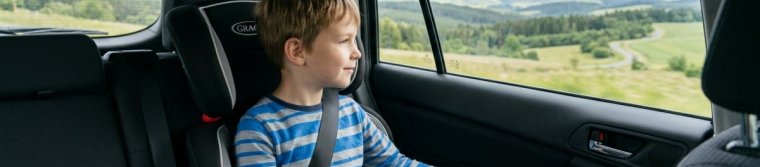
For kids, a spot with a clear view out of a window can help.
Car seats and boosters should always follow the maker's instructions and your state's rules.
Look out, not down
MedlinePlus says looking out into the distance can help.
That works better than trying to read or looking at something inside the vehicle.
- Encourage passengers to watch the road ahead or the horizon.
- Put books, puzzles and handheld games away on curvy roads.
- Choose audio instead of screens: music, audiobooks or podcasts.
- Play car games that use the view, like spotting license plates or landmarks.
Phones and tablets are the hardest habit to change, especially for teens.
Agree on screen breaks before the trip, not in the middle of a queasy moment.
Drive smoothly
The driver can help everyone in the car feel better.
Smooth driving means fewer sudden changes in motion for passengers.
- Brake early and gently instead of hard and late.
- Take curves at a steady, moderate speed.
- Avoid quick lane changes when you do not need them.
- Leave extra following distance so you rarely have to brake suddenly.
These habits are also safer.
Our guide to the three-second rule explains how much space to leave.
Plan the route and the stops
Some roads are harder on sensitive passengers than others.
Mountain passes and twisting coastal highways have many curves in a row.
If you can, compare routes and choose the straighter option for long stretches.
When a curvy scenic drive is the highlight, plan a break before and after it.
Regular stops give everyone fresh air and a chance to reset.
A short walk on solid ground often helps a queasy passenger feel steadier.
Our guide to mountain road trips covers other things to know before you head uphill.
Food, drinks and fresh air
Many travelers find that a light snack works better than a big, heavy meal before a drive.
Keep water handy so passengers can take small sips.
Many people also feel better with cool, fresh air than in a warm, stuffy car.
Crack a window or point an air vent toward the passenger who feels sick.
Strong food smells in a closed car can bother some passengers, so eat at stops when you can.
What about ginger?
Ginger is a popular home remedy for nausea, and you will see it sold for travel.
The National Center for Complementary and Integrative Health has reviewed the research.
It reports that most studies of ginger for motion sickness have not shown it to be helpful.
Ginger can also cause side effects such as heartburn, stomach discomfort and diarrhea.
If you take any medicine, talk with your healthcare provider before using ginger or other herbal products.
Some herbs and medicines interact in harmful ways.
Medicines and when to ask for help
Medicines for motion sickness are available, with and without a prescription.
Some can cause drowsiness, so read the label carefully.
A driver should never take a medicine that may cause drowsiness before or during a drive.
Ask a pharmacist or healthcare provider which option fits you.
This matters most if you take other medicines or are pregnant.
Always ask a child's healthcare provider before giving any motion sickness medicine to a child.
Talk with a provider too if motion sickness is severe or happens even on short, smooth trips.
Pack a car sickness kit
- Sealable bags or small bins, kept within easy reach.
- Wet wipes, paper towels and a small trash bag.
- Bottled water for sips and rinsing.
- A change of clothes for kids who get sick often.
- Plain snacks for the trip.
- Any medicine your provider recommended, in its labeled package.
Keep the kit in the passenger area, not in the trunk.
When someone feels sick, there is very little time to dig for supplies.
Long days in the car
Car sickness often gets worse as a long day wears on.
Tired, hungry or overheated passengers tend to have a harder time.
Shorter driving days can help a sensitive traveler enjoy the whole trip.
Plan an interesting stop every couple of hours, and give everyone a chance to walk.
Our guide to drowsy driving on long road trips explains why breaks help the driver too.
The bottom line
Car sickness happens when your eyes and inner ear disagree about motion.
Front seats, a view of the horizon, smooth driving and fewer screens all help.
Plan breaks around curvy roads and pack a simple kit.
For frequent or severe car sickness, talk with a healthcare provider before your next long drive.
Sources and Further Reading
- MedlinePlus (National Library of Medicine): Motion Sickness — supports how mismatched signals cause motion sickness, who gets it most, the early symptoms, the front-seat advice and looking out into the distance.
- National Center for Complementary and Integrative Health: Ginger — supports what research shows about ginger for motion sickness, its side effects and the advice to check with a provider about interactions.